More people than ever are living with anxiety and other mental health conditions, and the current social, economic, and political climate is intensifying these challenges.
Ongoing global uncertainty, economic instability, political tension, social unrest, and the long-term effects of the pandemic have created a state of chronic stress for many individuals.
According to the Centers for Disease Control and Prevention (CDC), anxiety disorders are among the most common mental health conditions in the United States, and reported anxiety symptoms have increased significantly in recent years.
👉 https://www.cdc.gov/mentalhealth
Constant stress can overwhelm the nervous system, leaving many individuals feeling tense and unbalanced before they even arrive at their medical appointment.
When medical offices are not designed with mental health accessibility in mind, the experience can become overwhelming rather than supportive.
Mental health accessibility is a vital component of accessible healthcare.
Anxiety-Related Disabilities and Accessibility Barriers in Medical Offices
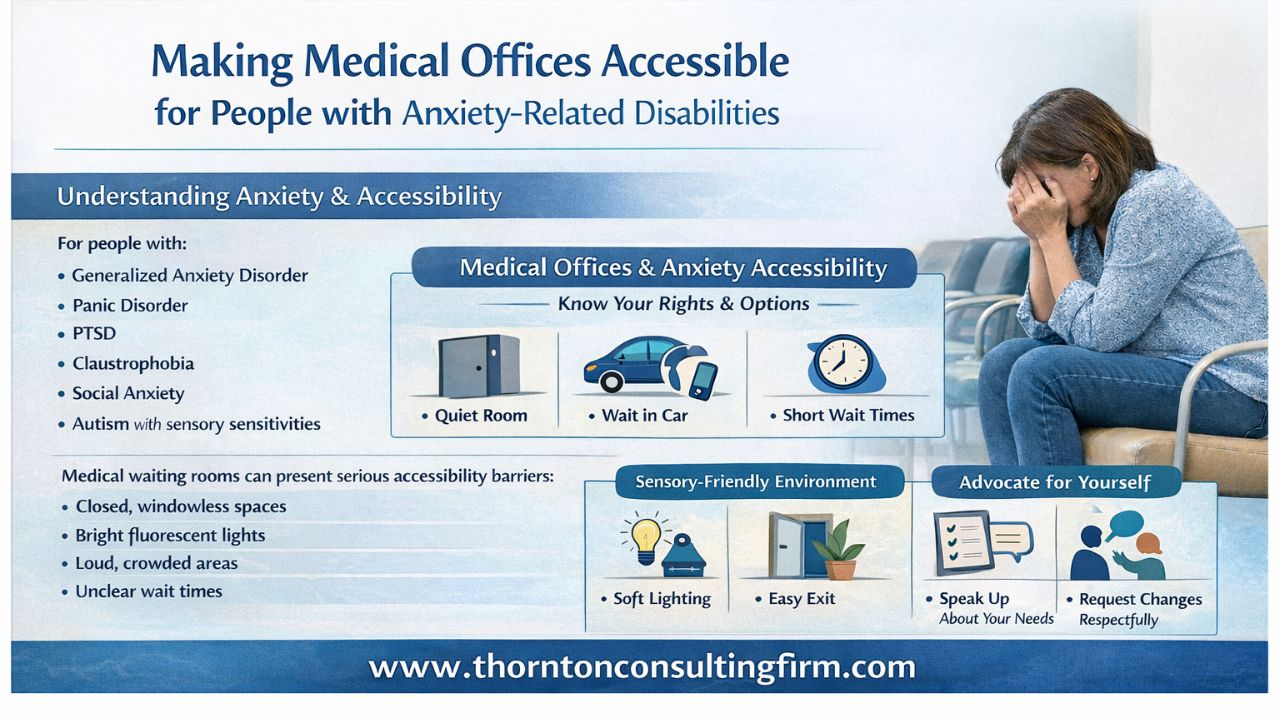
People living with anxiety-related disabilities, including
- Generalized Anxiety Disorder
- Panic Disorder
- PTSD
- Claustrophobia
- Social anxiety
- Autism with sensory sensitivities
The National Institute of Mental Health (NIMH) explains that anxiety disorders can trigger intense physical and emotional responses to perceived threats, including confined spaces, unpredictability, and sensory overload
Common accessibility barriers in medical offices include:
- Closed or windowless waiting rooms
- Bright fluorescent lighting
- Loud televisions or conversations
- Crowded seating arrangements
- Unclear or unpredictable wait times
- Limited access to exits
For individuals with claustrophobia, a closed waiting room can feel suffocating. For those with anxiety or PTSD, uncertainty and overstimulation can trigger panic attacks, shortness of breath, dizziness, nausea, or emotional shutdown.
Mental Health Disabilities and the Americans with Disabilities Act (ADA)
Mental health conditions such as anxiety disorders and PTSD are recognized as disabilities under the Americans with Disabilities Act (ADA) when they substantially limit one or more major life activities.
The ADA National Network confirms that healthcare providers are required to offer reasonable modifications to policies, practices, and procedures to ensure accessibility for people with mental health disabilities
👉 https://adata.org
The U.S. Department of Justice further clarifies that accessibility under the ADA includes how services are delivered — not just physical access — covering waiting procedures, communication, and patient flow
👉 https://www.ada.gov
Accessibility Solutions for Anxiety-Inclusive Medical Offices
🪑 Accessible Waiting Options
Reasonable accessibility modifications may include:
- Quiet or private waiting rooms
- Allowing patients to wait outside or in their car with a text or phone notification
- Direct rooming when possible
- Seating near exits for patients with claustrophobia
The ADA National Network notes that these types of modifications are often considered reasonable because they improve access without fundamentally altering medical services
👉 https://adata.org
Accessible Scheduling Options
Scheduling flexibility plays an important role in accessibility, including:
- Early morning or low-traffic appointment times
- Clear communication about expected wait times
- Modified check-in procedures
🌿 Sensory-Friendly Accessibility Adjustments
Sensory accessibility supports individuals with anxiety and sensory sensitivities and may include:
- Softer or adjustable lighting
- Quiet zones away from televisions
- Reduced background noise
- Avoidance of strong scents
The Autistic Self Advocacy Network (ASAN) identifies sensory-friendly environments as a core accessibility requirement, not a convenience
👉 https://autisticadvocacy.org
Communication Accessibility and Staff Awareness
Communication is a critical component of accessibility. Best practices include:
- Calm, respectful interactions
- Clear explanations of what to expect
- Trauma-informed communication
- Avoiding loud announcements or abrupt instructions
The World Health Organization (WHO) highlights that emotionally safe healthcare environments are essential to mental health accessibility and patient well-being
👉 https://www.who.int/teams/mental-health-and-substance-use
Why Mental Health Accessibility in Medical Offices Is Critical
When anxiety-related accessibility needs are not addressed:
- Patients may delay or avoid medical care.
- Symptoms may worsen over time.
- Trust in healthcare systems declines.
- Health outcomes suffer
How Patients Can Advocate for Accessibility in Medical Offices
Advocating for accessibility can feel difficult, particularly when anxiety levels are already elevated. For many individuals, anxiety begins days before a medical appointment, affecting both emotional and physical responses.
Some patients experience conditions such as white coat hypertension, where anxiety in medical settings causes significant increases in blood pressure. Communicating this to healthcare providers allows doctors and medical professionals to better understand readings and symptoms rather than misinterpreting anxiety-driven responses.
Working collaboratively with medical professionals—by explaining anxiety triggers, requesting reasonable modifications, and sharing what supports emotional regulation—is an effective accessibility strategy.
According to the ADA National Network, patients have the right to request reasonable accommodations related to anxiety and mental health disabilities
👉 https://adata.org
Patients may:
- Inform the office in advance of any anxiety-related accessibility needs.
- Request reasonable modifications to waiting procedures.
- Speak with an office manager or patient advocate.
- Clearly explain what helps reduce distress.
- Document requests if accessibility barriers persist
In Conclusion
As anxiety and mental health conditions continue to rise, medical offices must evolve to meet accessibility needs that go beyond ramps and elevators.
True accessibility recognizes invisible disabilities and prioritizes environments that support calm, safety, and dignity. Mental health accessibility is healthcare accessibility — and inclusive medical offices benefit everyone.
Thornton Consulting Firm provides PDF remediation services to help medical offices and healthcare organizations meet accessibility requirements. Contact us for questions or to request a quote.

